
Heat Pumps
Emergency Heat vs. Aux Heat on a Heat Pump: What's the Difference and When to Use Each
Published
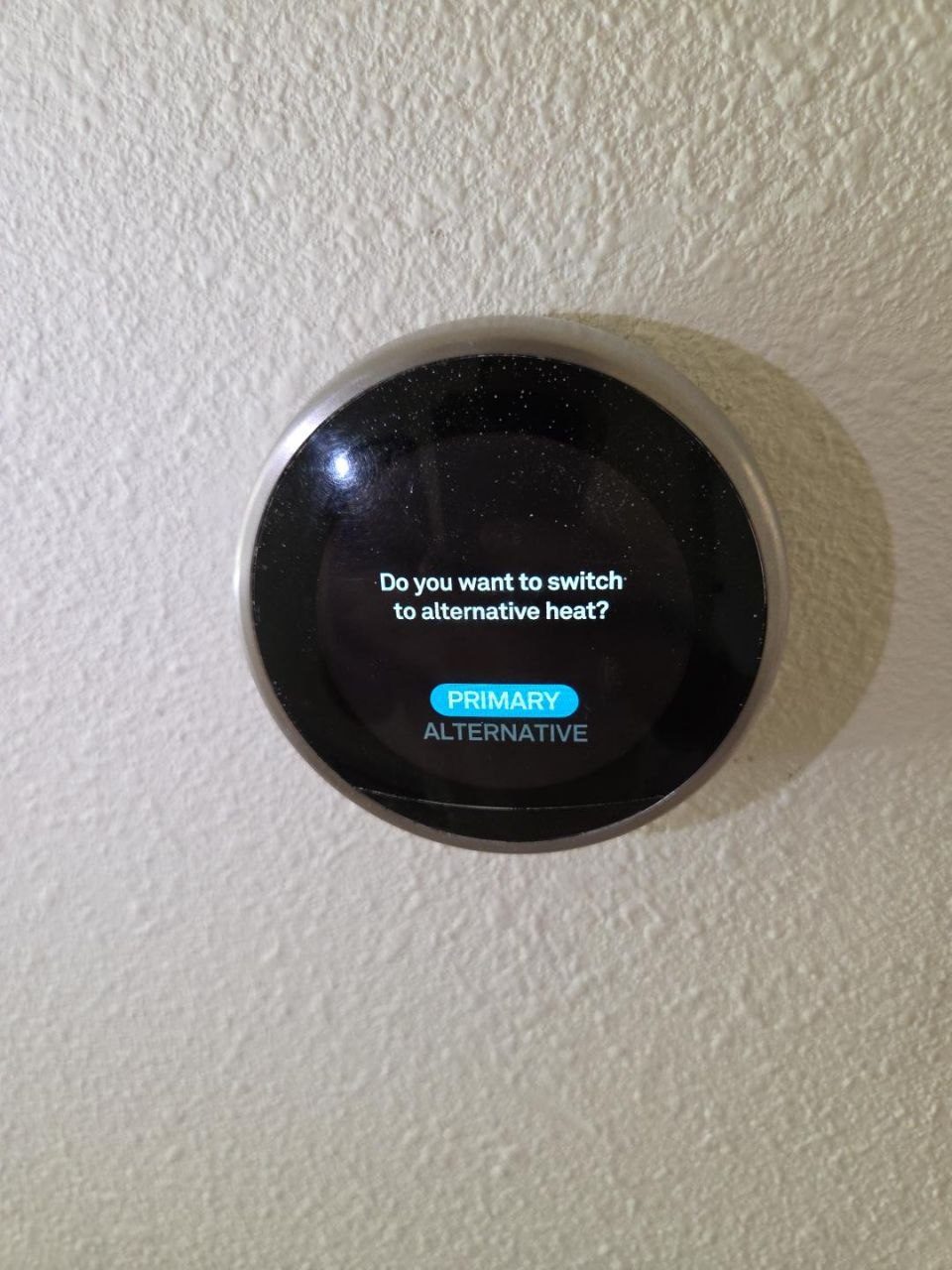
Aux heat (auxiliary heat) is backup heat your heat pump system turns on automatically when the heat pump alone can't keep up — on a cold morning, during a defrost cycle, or when you bump the thermostat up several degrees. Emergency heat (often labeled "EM Heat") is a setting you choose manually that shuts the heat pump off completely and runs only the backup heat. Seeing "Aux" on your thermostat now and then is normal. Emergency heat is meant only for when the heat pump itself is broken or the outdoor unit is damaged or buried in ice — and since backup heat usually costs much more to run, it's a short-term fix until a technician arrives.
Need help now?
Call (206) 823-0670 or request a callback. Upfront pricing, licensed & insured technicians, 24/7 emergency service.
How backup heat works in a heat pump system
A heat pump heats your home by moving heat from the outdoor air to the inside. It's very efficient in the kind of cool, damp weather the Puget Sound area gets most of the winter. But as temperatures drop, a heat pump has less heat to work with, and its output falls just as your house needs more.
That's why most ducted heat pump systems have a second heat source, usually one of these:
- Electric resistance heat strips inside the indoor air handler. They work like a giant toaster coil: simple and reliable, but expensive to run.
- A gas furnace, in a dual-fuel (hybrid) system. The furnace takes over when it's colder or more economical.
The thermostat decides when to bring that backup heat in. "Aux" and "Emergency" are two different ways of using the same backup heat.
What aux heat means
Aux heat is the system managing itself. Your thermostat turns on the backup heat alongside the heat pump when it senses that the heat pump alone isn't enough. Common reasons:
- Cold snaps. When outdoor temperatures dip near or below freezing, the backup may help on and off.
- Defrost cycles. In damp, near-freezing weather, frost builds up on the outdoor coil. The heat pump briefly reverses to melt it, and aux heat often turns on so you don't get a blast of cool air indoors. You may see steam rising off the outdoor unit — that's normal.
- Big setpoint jumps. Raising the thermostat several degrees at once, such as at the end of a nighttime setback, can tell the system to call for backup heat to catch up quickly.
- Recovering from a cold house. After a vacation or a power outage, aux heat may run for a while.
Seeing "Aux Heat" for short stretches on cold mornings is expected. Seeing it all the time, even on mild 45–50°F days, is not — that usually means the heat pump isn't doing its share.
What emergency heat means
Emergency heat is a manual override. When you switch the thermostat to EM Heat (or "Emergency"), the outdoor heat pump stops, and the house is heated by the backup heat alone.
Use emergency heat only when:
- The heat pump has stopped heating and you're waiting for a repair
- The outdoor unit is damaged — for example, hit by a falling branch during a windstorm
- The outdoor unit is encased in ice or snow that won't clear and the system isn't heating
- A technician tells you to use it
Don't use emergency heat just because it's cold outside. Your system already brings in backup heat automatically when it needs it. Running on emergency heat for days can drive up your electric bill quickly, and it can hide a problem that's getting worse.
Aux heat vs. emergency heat at a glance
| Aux heat | Emergency heat | |
|---|---|---|
| Who turns it on | The thermostat, automatically | You, manually |
| Is the heat pump running? | Yes, working alongside backup heat | No — heat pump is off |
| When it's normal | Cold snaps, defrost, catching up after a setback | Only when the heat pump isn't working |
| Running cost | Higher while it runs, usually brief | Usually highest, for as long as it stays on |
| What to do | Usually nothing, unless it runs constantly | Call for service and switch back once repaired |
Why your thermostat might show "Aux" all the time
If aux heat seems to be on nearly every time the heat runs, these are the usual suspects:
- A dirty air filter. Restricted airflow makes the heat pump less effective and can lead to icing outdoors.
- Thermostat settings. The balance point or aux lockout temperature may be set too high, or the thermostat may be configured for the wrong equipment type.
- Large nighttime setbacks. Dropping the temperature 7–10 degrees overnight can trigger aux heat every morning. Smaller setbacks often work better with heat pumps.
- An outdoor unit that's iced over or blocked by leaves, plants or debris.
- Low refrigerant from a leak, which reduces heating capacity.
- A failed defrost control, sensor or reversing valve.
- An undersized or aging heat pump that can no longer keep up as temperatures fall.
If your heat pump is also delivering air that feels cool at the vents, see our guide on why a heat pump blows cold air.
DIY checklist: what you can safely check
These steps are safe for any homeowner and fix a fair number of "Aux heat is always on" complaints:
- Replace the air filter if it looks gray or clogged.
- Check the thermostat mode. It should be on Heat, not EM Heat. It's surprisingly easy to switch to emergency heat by accident and leave it there.
- Set the fan to Auto.
- Shrink big setbacks. Try a smaller overnight drop of a few degrees, or raise the temperature gradually in the morning instead of all at once.
- Look at the outdoor unit. Clear leaves and debris from around it, keep at least a couple of feet open on all sides, and make sure the fan spins when the system runs.
- Watch for ice. A light frost that clears after defrost is normal. Ice that covers the coil and stays is not — don't chip at it, since that can damage the coil.
- Check gutters above the unit. Water dripping onto the outdoor unit can freeze into a solid block on cold nights.
- Check the breaker panel for a tripped breaker on the outdoor unit or air handler. Reset once; if it trips again, leave it off and call.
Don't change installer-level thermostat settings, open electrical panels on the equipment, or add refrigerant yourself.
Getting ready for winter in the Seattle area
Fall is a good time to make sure your backup heat is ready before the first hard freeze. Many homeowners don't notice their heat strips or backup furnace has a problem until the coldest night of the year, when the heat pump needs help most. During windstorm season, also keep the area around the outdoor unit clear of loose branches and patio furniture.
A pre-season heat pump check-up typically includes testing the backup heat and its controls, confirming the thermostat is set up correctly for your equipment, checking refrigerant performance and defrost operation, and cleaning coils. Our heat pump services cover repair, maintenance and replacement.
When to call a pro
Call a licensed HVAC technician if:
- Aux heat runs almost constantly, even in mild weather
- You've had to switch to emergency heat to stay warm
- The outdoor unit is iced over and doesn't clear after a defrost cycle
- The outdoor fan isn't spinning, or you hear grinding, buzzing or squealing
- A breaker trips again after one reset
- Your electric bill jumped without an obvious reason
- You smell burning when the backup heat comes on (some dusty smell the first time each season is normal)
A technician will check the heat pump's refrigerant charge and defrost controls, test the reversing valve and outdoor fan, measure airflow, and confirm your thermostat is configured correctly for your system. If your heat pump is aging and spending more and more time on backup heat, we'll give you honest repair-vs-replace advice and help you find any utility rebates you qualify for.
Yeti Heating & Air repairs and services heat pumps across Seattle, Bellevue, Kirkland, Redmond, Renton, Shoreline, Lynnwood, Bothell, Edmonds and Everett. Our licensed, insured technicians give you upfront pricing you approve before any work starts, and we offer 24/7 emergency service if your heat goes out.
Stuck on emergency heat, or aux heat won't turn off? Call (206) 823-0670 or request a callback. We're available Mon–Sat 7am–7pm, with 24/7 emergency service.
Frequently asked questions
What is the difference between aux heat and emergency heat?
Aux heat is backup heat your thermostat turns on automatically when the heat pump needs help, while the heat pump keeps running. Emergency heat is a setting you choose manually that turns the heat pump off and heats the house with backup heat only.
Is it normal for my thermostat to say Aux Heat?
Yes, for short periods on cold mornings, during defrost cycles, or after you raise the temperature several degrees. If Aux shows almost every time the heat runs, even in mild weather, have the system checked.
When should I use emergency heat?
Only when the heat pump has stopped heating, the outdoor unit is damaged or iced over and not heating, or a technician tells you to. Call for service and switch back to Heat once it's repaired.
Does emergency heat cost more to run?
Usually, yes. Most heat pump systems use electric resistance strips for backup heat, which use much more electricity than the heat pump to make the same amount of heat. That's why it's meant as a short-term fix.
Why is my aux heat running all the time?
Common causes are a dirty filter, large nighttime setbacks, thermostat settings, an iced-over or blocked outdoor unit, low refrigerant, or a failing defrost control or reversing valve. Start with the filter and thermostat, then call a technician.
Related service
Heat pumps in SeattleReady to get comfortable?
Call (206) 823-0670 or request a callback. Upfront pricing, licensed & insured technicians, 24/7 emergency service.