Maintenance
How Often Should You Change Your Furnace Filter? A Seattle Homeowner's Guide
Published
For most Seattle-area homes, a standard 1-inch furnace filter should be changed every 1 to 3 months, while a thicker 4- or 5-inch media filter usually lasts 6 to 12 months. The right interval for your home depends on the filter's thickness, how often your system runs, and what's in the air: pets, a remodel, wildfire smoke, or wood smoke all shorten it. The simplest rule is to check your filter every month during heating season and replace it as soon as it looks gray and dusty, whatever the calendar says.
Need help now?
Call (206) 823-0670 or request a callback. Upfront pricing, licensed & insured technicians, 24/7 emergency service.
Furnace filter replacement schedule at a glance
Use this as a starting point, then adjust based on what you see when you check the filter.
| Filter type | Typical replacement interval | Replace sooner if... |
|---|---|---|
| 1-inch fiberglass (basic) | About every 30 days | Any visible dust buildup |
| 1-inch pleated (MERV 8–11) | Every 1–3 months | Pets, allergies, heavy winter use |
| 1-inch pleated MERV 13 | Every 1–2 months | Smoke events, construction dust |
| 2-inch pleated | Every 3–6 months | Pets or a busy household |
| 4–5 inch media filter | Every 6–12 months | Smoke season, remodel, shedding pets |
| Washable/electrostatic | Clean every 1–3 months | It looks dirty after cleaning |
Your filter's packaging and your furnace or heat pump manual are the best guide for your specific equipment. When the two disagree, follow the equipment manufacturer.
Why Seattle homes often need more frequent changes in winter
The Puget Sound region has mild summers, so many homes barely run their system from June through September. That changes fast once fall rain settles in. From October through April, your furnace or heat pump may run for hours every day, and every hour of runtime pulls more dust through the filter.
A few local factors make filters load up faster:
- Long heating season. Months of steady operation mean a filter that lasted all summer can clog in weeks.
- Closed-up houses. With windows shut, dust, pet dander and cooking particles stay inside and end up in the filter.
- Wood stoves and fireplaces. On still, foggy winter days, wood smoke from your own home or neighbors adds fine particles.
- Leftover wildfire smoke. A filter that worked through a smoky late summer may already be loaded when heating season starts.
- Heat pumps run longer cycles. That's normal and efficient, but it means more air passes through the filter each day than with an older furnace.
How to tell your filter needs changing
Don't rely only on the calendar. Pull the filter out and look:
- Hold it up to a light. If you can barely see light through it, it's time.
- Check the color. A new filter is white or off-white; gray or brown means it's loaded.
- Look for buildup in the pleats. Visible dust, lint or pet hair packed in the folds is a clear sign.
- Notice the house. More dust on furniture, weaker airflow at the vents, a musty smell, or rooms that take longer to warm up can all point to a clogged filter.
- Watch for a whistle. A return grille that starts whistling often means the filter is restricting air.
What happens if you don't change your furnace filter
A dirty filter is one of the most common causes of heating service calls, and it's the cheapest one to prevent.
Higher energy bills
When the filter is clogged, the blower has to work harder to move the same amount of air, and the system runs longer to reach your thermostat setting.
Overheating and short cycling
In a gas furnace, poor airflow lets the heat exchanger get too hot. A safety switch then shuts the burners off, the furnace cools down, and it restarts. That on-off pattern is called short cycling. Our guide on why a furnace keeps turning on and off explains it in detail.
Frozen coils and weak heat from a heat pump
Heat pumps are sensitive to airflow too. A clogged filter can reduce heating output, contribute to icing on the coil in cooling mode, and add wear on the blower motor.
Worse indoor air quality
Once a filter is full, it stops doing its job well. More dust, dander and fine particles circulate through your home, which matters for anyone with allergies or asthma.
Extra wear on parts
Blower motors, limit switches and heat exchangers all last longer when air moves freely. Skipping filter changes for years can shorten the life of the whole system.
Does a higher MERV filter need changing more often?
Usually, yes. Higher-MERV filters trap smaller particles, so they fill up faster, especially in the thin 1-inch size. A MERV 13 filter is a smart choice during smoke events, but in a 1-inch slot it may need replacing monthly, and some systems struggle with the added airflow resistance. A thicker 4- or 5-inch media filter gives you higher filtration with less restriction and a longer life. For more on choosing the right rating, see our guide to the best MERV filter for wildfire smoke.
DIY checklist: how to change your furnace filter safely
Changing a filter takes about five minutes and is safe for any homeowner.
- Turn the thermostat off (or set the system to Off) so the blower doesn't start while the filter is out.
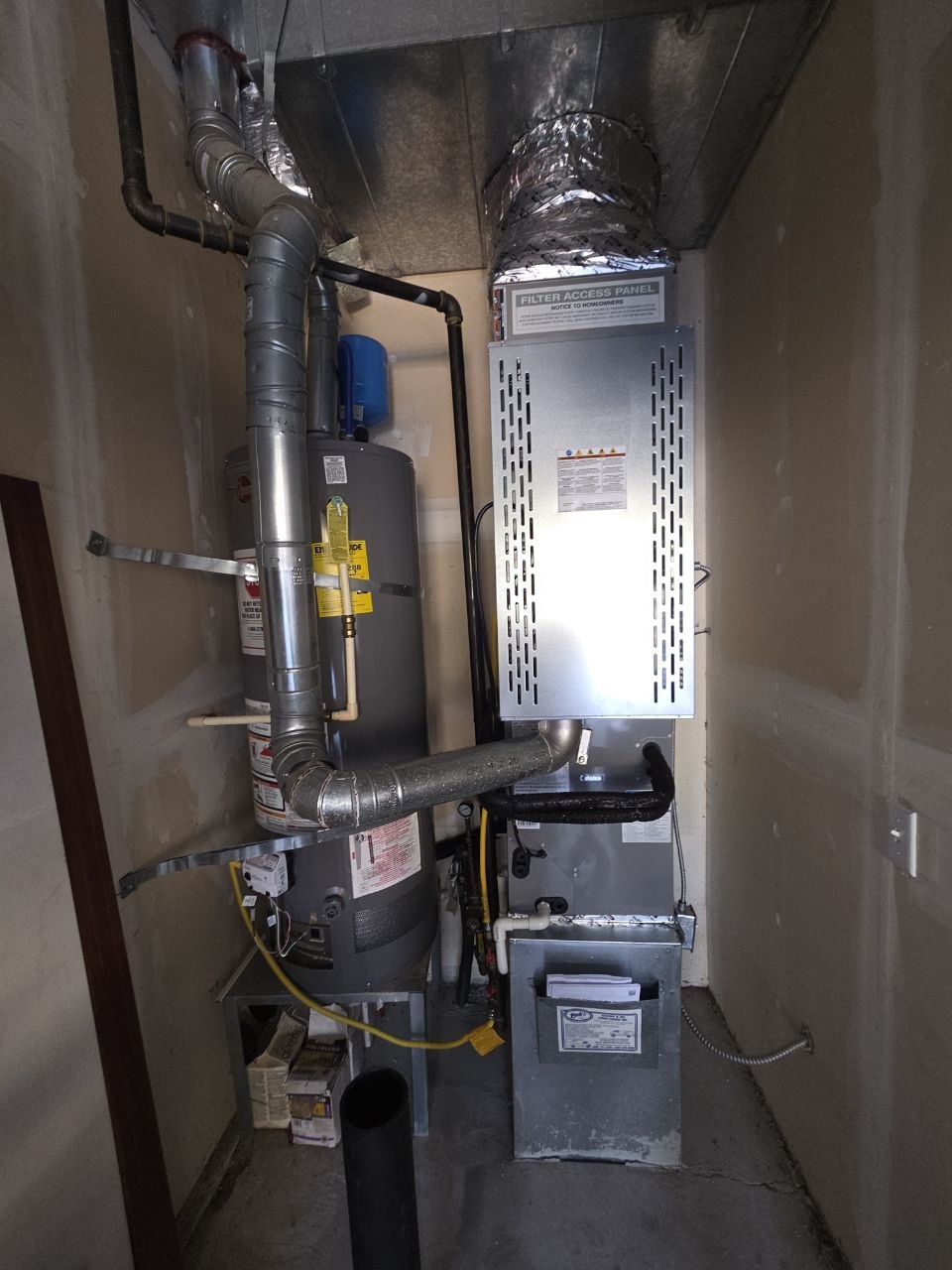
- Find the filter. It's usually in a slot next to the furnace or air handler, behind a return grille in a wall or ceiling, or in a filter cabinet on the return duct.
- Note the size and the airflow arrow. The size, like 16x25x1, is printed on the frame. Take a photo before you remove it.
- Slide the old filter out and bag it to keep dust contained.
- Insert the new filter with the arrow pointing toward the furnace (in the direction air flows, away from the return).
- Close any access door or grille securely. A loose cover lets unfiltered air bypass the filter.
- Turn the system back on and confirm air is flowing at the vents.
- Write the date on the new filter's frame or set a phone reminder for your next check.
Tip: buy filters in multi-packs in your exact size before winter, so a replacement is always on hand.
When to call a pro
Filter changes are a homeowner job, but some situations call for a technician:
- You can't find the filter, or there seem to be several in different places
- The filter slot doesn't close properly or the filter doesn't fit snugly
- You want to upgrade to a 4- or 5-inch media filter cabinet
- Your filter gets dirty much faster than it should, which can point to leaky return ducts pulling in attic or crawlspace dust
- Airflow is still weak, or the system keeps short cycling, after you put in a clean filter
- A filter left in too long has caused ice on a coil, error codes, or the furnace shutting itself off
During a maintenance visit, a technician checks the filter, measures airflow, cleans key components, and makes sure your system is running safely before the coldest weeks. Learn more about our HVAC maintenance service.
Yeti Heating & Air serves homeowners in Seattle, Bellevue, Kirkland, Redmond, Renton, Shoreline, Lynnwood, Bothell, Edmonds and Everett. Our licensed and insured technicians give honest advice, and you'll see upfront pricing approved before any work starts.
Not sure your furnace or heat pump is getting the airflow it needs? Call (206) 823-0670 or request a callback. We're available Mon–Sat 7am–7pm, with 24/7 emergency service.
Frequently asked questions
How often should I change a 1-inch furnace filter?
Most 1-inch pleated filters should be replaced every 1 to 3 months. Basic fiberglass filters often need changing monthly. During a busy Seattle heating season, or with pets, plan on the shorter end of the range.
How long does a 4-inch furnace filter last?
A 4- or 5-inch media filter typically lasts 6 to 12 months because it has much more surface area. Check it every few months anyway, and replace it sooner after wildfire smoke, a remodel, or heavy pet shedding.
Do I need to change my filter more often in winter?
Usually, yes. Your furnace or heat pump runs far more from October through April, so more air and dust pass through the filter. Checking it monthly during heating season is a good habit.
Can a dirty filter cause my furnace to stop working?
It can. A clogged filter restricts airflow, which can make a furnace overheat and shut itself off on a safety switch, or cause a heat pump to lose heating capacity. Replacing the filter is the first thing to check when heat seems weak.
Which way does the arrow on a furnace filter go?
The arrow should point in the direction of airflow: toward the furnace or air handler and away from the return duct. A filter installed backward filters less effectively and can restrict airflow.
Related service
HVAC maintenance in SeattleReady to get comfortable?
Call (206) 823-0670 or request a callback. Upfront pricing, licensed & insured technicians, 24/7 emergency service.