Heat Pumps
Mini-Split vs. Central Heat Pump: Which Is Right for Your Seattle Home?
Published
For most Seattle-area homes that already have ductwork in decent shape, a central (ducted) heat pump is the simplest whole-house choice; for homes without ducts, with poor ducts, or with a few problem rooms, a ductless mini-split is usually the better fit. Both are heat pumps — they heat in winter and cool in summer using the same technology. The real difference is how the warm or cool air gets to your rooms: through a network of ducts from one indoor unit, or directly from wall-, floor- or ceiling-mounted units in each zone. The right answer depends on your ducts, your layout, and how you actually live in the house.
Need help now?
Call (206) 823-0670 or request a callback. Upfront pricing, licensed & insured technicians, 24/7 emergency service.
The quick answer: which one fits your home?
| Your situation | Usually the better fit |
|---|---|
| Gas or oil furnace with ductwork that reaches every room | Central heat pump |
| Electric baseboards, a boiler with radiators, or wall heaters | Ductless mini-split |
| Ducts that are leaky, undersized, or run through a damp crawlspace | Repair ducts for central, or go ductless |
| One or two rooms that are always too hot or cold | Ductless mini-split for those rooms |
| You want the most even, whole-house air filtration | Central heat pump |
| You want room-by-room temperature control | Ductless mini-split |
| Finished attic, addition, ADU or garage conversion | Ductless mini-split |
Some homes end up with both: a central heat pump for the main floors and a single mini-split zone for a bonus room the ducts never reached.
How each system works
Central (ducted) heat pump
A central heat pump replaces your outdoor AC unit (or adds one, if you never had AC) and connects to an indoor air handler or your existing furnace. Air is pulled through return vents, passed over the indoor coil, filtered, and pushed back out through your supply registers. One thermostat usually controls the whole house, though zoning dampers can split it into areas.
When a heat pump is paired with an existing gas furnace, it's called a dual-fuel or hybrid system. The heat pump handles most of the heating, and the furnace takes over in the coldest weather or when you need fast recovery.
Ductless mini-split
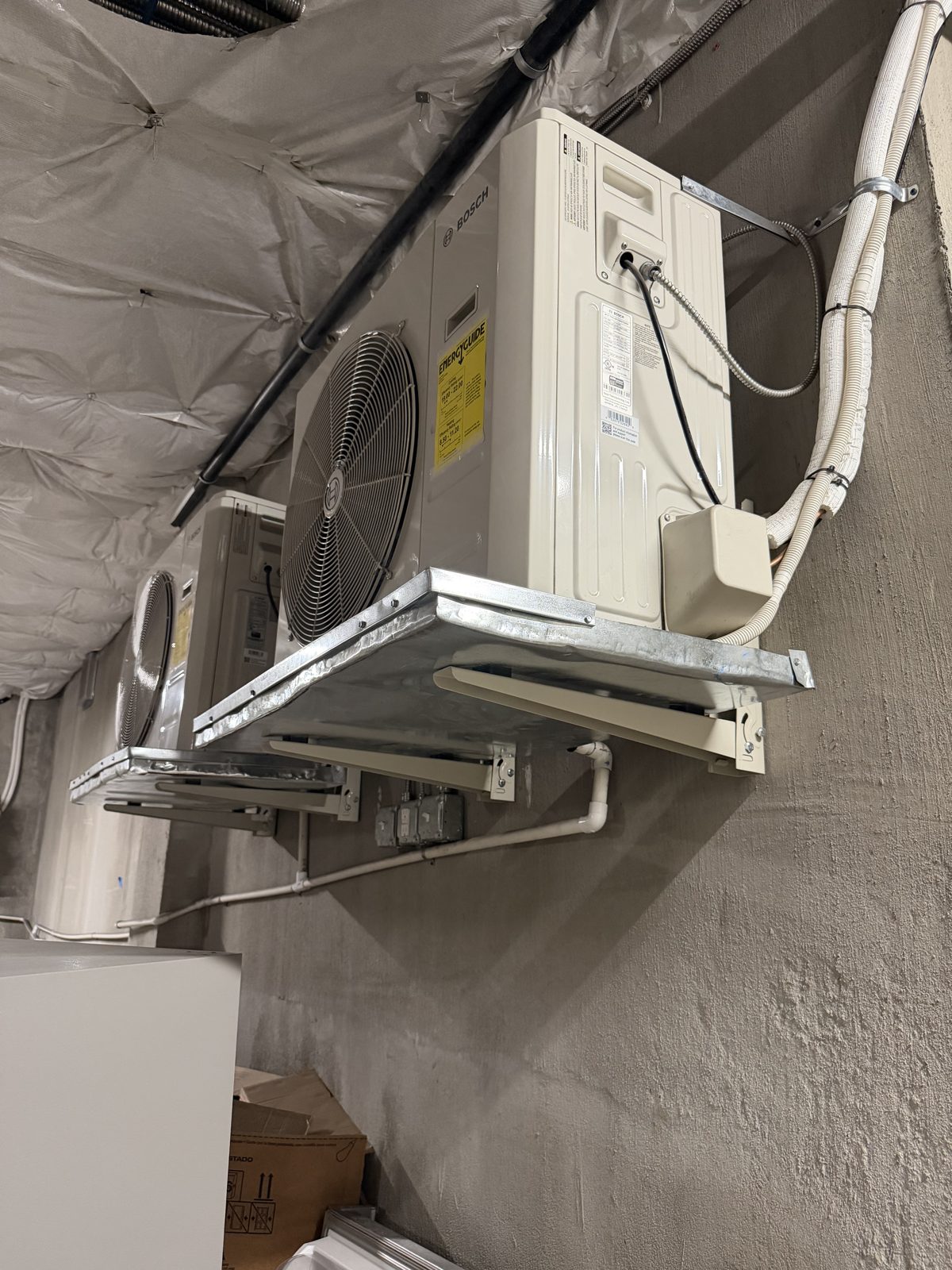
A mini-split has an outdoor unit connected to one or more indoor "heads" through a small line set — refrigerant lines, a power cable and a condensate drain — that passes through a hole about three inches across. Each head heats and cools its own zone with its own controls. Multi-zone systems can run several heads from one outdoor unit. We cover this setup in depth in our guide to ductless mini-splits for older Seattle homes.
Central heat pump: pros and cons
Pros
- Uses ducts you already have, so installation is often less disruptive.
- Hidden equipment — no wall units, just familiar vents.
- Whole-house filtration. A good media filter cleans air for every room, which helps during wildfire smoke season and pollen season.
- Pairs with your existing furnace if you want a dual-fuel setup.
- One thermostat keeps things simple.
Cons
- Only as good as your ducts. Leaky or undersized ducts waste energy and leave rooms uneven. Ducts in crawlspaces and attics can lose a lot of heat if they aren't sealed and insulated.
- Less room-by-room control without added zoning.
- Airflow needs can be higher than an old furnace was designed for, so some homes need return-air or duct changes.
Ductless mini-split: pros and cons
Pros
- No ducts needed, which is ideal for many older homes in Seattle, Shoreline and Edmonds.
- No duct losses. Heat goes straight into the room you're in.
- Zone control. Keep bedrooms cooler at night and the living room warm without heating empty rooms.
- Quiet operation indoors and out.
- Great for additions and problem rooms without redoing the whole house.
Cons
- Visible indoor units in each zone (compact ducted heads or floor consoles can help).
- Closed floor plans need more heads, which adds cost.
- More filters to clean — each head has washable filters that need rinsing regularly.
- Filtration is room-level, not as thorough as a whole-house media filter.
How they handle a Seattle winter
Both systems handle our climate well. The Puget Sound area has long, cool, damp winters and only short stretches of hard freezing — conditions where modern heat pumps run efficiently. Cold-climate models of both types are designed to keep heating well below freezing.
A few winter details worth knowing:
- Defrost cycles are normal. On damp days near freezing, the outdoor unit will pause heating for a few minutes to melt frost. Our post on heat pumps freezing or icing up explains what's normal and what isn't.
- Backup heat matters more for central systems. A ducted heat pump typically has electric heat strips or a gas furnace for backup. A mini-split usually relies on its own capacity, and some homeowners keep a few baseboards for hard freezes.
- Sizing is everything. An undersized system of either type struggles on the coldest nights. A proper room-by-room load calculation should come before any equipment choice.
What affects the cost
Prices depend entirely on the house, so we don't quote numbers without seeing it. These are the factors that move the price for each option:
Central heat pump
- Whether your ducts can be reused, repaired, or need changes
- Air handler vs. pairing with your existing furnace
- Equipment size and efficiency
- Electrical work and any panel upgrade
Ductless mini-split
- Number of zones and the type of indoor units
- Line-set length and routing, especially in multi-story homes
- Electrical work and outdoor unit placement
In general, a central heat pump is often less expensive than a multi-zone mini-split when good ducts are already in place, while ductless can come out ahead in homes that would need new ductwork. For a deeper look, see how much a heat pump costs in Seattle.
Rebates and utility programs
Utility incentives can apply to both ducted and ductless systems, but the rules differ. Seattle City Light offers instant discounts on qualifying heat pumps through participating contractors. PSE offers rebates for some electric-heat conversions and income-qualified programs, and some programs require specific equipment, contractor networks or system designs. The federal heat pump tax credit ended after 2025. Programs change often, so Yeti helps every customer find what they actually qualify for before signing anything.
DIY checklist: figure out what you have
These steps are safe and will make your first conversation with a contractor faster and more useful:
- Check for ducts. Look for floor or ceiling registers and a return grille. If every room has a register, you have a starting point for central.
- Look at accessible ductwork in the basement, crawlspace or attic. Note disconnected sections, crushed runs, or missing insulation.
- Walk the house with a notepad and mark rooms that run too hot, too cold or stuffy.
- Note your current heat source and its age — furnace, boiler, baseboards or oil.
- Photograph your electrical panel with the door open, including the main breaker size.
- Find a possible outdoor unit spot with clear airflow, away from roof drip lines.
- Check which utility serves you — Seattle City Light, PSE or Snohomish County PUD.
When to call a pro
Choosing between ducted and ductless isn't a guess you should make from the outside. Call a licensed HVAC contractor when:
- Your furnace or AC is aging and you're weighing a replacement
- You're switching from oil, baseboards or a boiler
- Some rooms never get comfortable
- You suspect your ducts are leaky or undersized
- You're adding living space — an ADU, attic or basement
- You're unsure whether your panel can handle a heat pump
A good contractor will inspect your ductwork, run a load calculation, and show you both options side by side with honest pros and cons. Yeti Heating & Air installs central and ductless heat pumps across Seattle, Bellevue, Kirkland, Redmond, Renton, Shoreline, Lynnwood, Bothell, Edmonds and Everett. Our licensed, insured technicians give straight repair-vs-replace advice, upfront pricing you approve before work starts, and help finding the utility rebates you qualify for.
Not sure which system is right for your home? Call (206) 823-0670 or request a callback. We're available Mon–Sat 7am–7pm, with 24/7 emergency service.
Frequently asked questions
Is a mini-split cheaper than a central heat pump?
It depends on your ducts. If good ductwork is already in place, a central heat pump is often the less expensive whole-house option. In homes that would need new ducts, a ductless system often costs less overall. Multi-zone mini-splits get more expensive as you add heads.
Can I use my existing ductwork for a heat pump?
Often, yes. Many Seattle-area homes with gas furnaces can reuse their ducts for a central heat pump. A contractor should check that the ducts are sealed, insulated and large enough, since heat pumps can need more airflow than an older furnace.
Which is better for allergies and wildfire smoke?
A central heat pump usually has the edge because it can run every room's air through one high-quality media filter. Mini-split heads have washable filters that catch dust but aren't as thorough. Some homes add a portable HEPA purifier in bedrooms.
Can I combine a central heat pump and a mini-split?
Yes. A common setup is a central heat pump for the main living areas plus a single mini-split zone for a bonus room, attic or addition the ducts don't reach well.
Do both types work in Seattle winters?
Yes. Our mild, damp winters suit heat pumps well, and cold-climate models of both types keep heating below freezing. Proper sizing and a plan for backup heat on the coldest nights are what matter most.
Related service
Heat pumps in SeattleReady to get comfortable?
Call (206) 823-0670 or request a callback. Upfront pricing, licensed & insured technicians, 24/7 emergency service.